Final Year Project(3rd and 4th year students in
University of Bath)
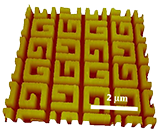
Impact of thermal treatment on plasmonics in gold nanogratings Students: Robbie Crowe, Esme Votta Duration: 10/2019 - 05/2020
The field of plasmonics exploits the unique optical properties of metallic nanostructures to control and manipulate light at the nanoscale. Unlike glass, metals such as gold have a negative dielectric function, which allows them to support collective electron excitations known as ‘surface plasmons’. These resonances produce extremely high local electric field intensities in localised regions. One key advantage of plasmonic devices is that they have the ability to confine light to volumes that are much smaller than its wavelength. This is very useful for many nanoscale applications, e.g single-molecule spectroscopy.
The aims of this project are first to perform crystallization and surface evolution studies of gold films annealed at different temperatures and then to investigate plasmonic properties of gold nanogratings annealed in similar conditions. The main characterisation methods in this project will be Scanning Tunnelling Microscopy (STM), Atomic Force Microscopy (AFM), Scanning Electron Microscopy (SEM) and high-resolution optical polarisation microscopy. In practice, the student(s) will be heating up various samples in a high-temperature furnace (or oven) to a set of temperatures. At each temperatures, SEM, AFM and optical characterization will be performed to track the evolution of the samples as re-shaping takes place.
YEAR
2015-16 (PH30036 & PH40065)
Final Year Project(3rd and 4th year students in
University of Bath)
Steampunk
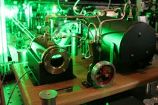
Science Students: Frazier Carr and James Kenny Duration: 10/2015 - 05/2016
This project aims to combine Victorian
engineering with state-of-the-art NanoPhotonics, making
Steampunk Science a reality. You would be building a
NanoPhotonic steam engine.
Small gold nanoparticles absorb light extremely
efficiently at specific wavelengths due to the surface plasmon
resonances of electrons that can be excited by laser light. As a
result of the absorption of light, the nanoparticles heat up.
This heating process finds applications in photo therapies, ex.
for cancer treatment. Moreover, it has recently been found that
such nanoparticles, when irradiated, can create steam
micro-bubbles. In this project, you would be exploring the
optical heating mechanism that is important for medicine and you
will be searching to optimise it in a fun way, by making a
light-powered steam engine.
Final Year Project(3rd and 4th year students in
University of Bath)
Create a physics lecture to be delivered by a robot Students: Hajah Fatin Ameera Binti Hj Mohd Yaakub and Erwandi Haji Harun Duration: 10/2015 - 05/2016
By now, you know everything about being a physics student. Perhaps it is time to learn something about teaching physics? Your task would be to program a robot to deliver a physics lecture on the subject of your choice. However, the robot cannot be employed simply as a puppet. Instead, you must use its motors, sensors and indicators to illustrate the physical concepts being taught; beyond this constraint, the only limit is your creativity.
Your robotic assistant will be Nao Evolution, the latest generation of humanoid robot from Aldebaran Robotics. The lecture can be directed at all levels, from primary school to university courses. As such, it can become part of our ongoing Education Outreach activities to schools or our university lectures. There is also interest from the University Media services to make a University promotional video on your work with the robot.
As a lecture is a linear sequence of event, the coding part itself is very straightforward. Only basic coding skills are required to operate Choreographe - the dedicated language from Aldebaran Robotics.
YEAR
2014-15 (PH30036 & PH40065)
Final Year Project(3rd
and 4th year students in
University of Bath)
Steampunk
Science Students: Samuel Buck and Scott Harrison Duration: 10/2014 - 05/2015
This project aims to combine Victorian
engineering with state-of-the-art NanoPhotonics, making
Steampunk Science a reality. You would be building a
NanoPhotonic steam engine.
Small gold nanoparticles absorb light extremely
efficiently at specific wavelengths due to the surface plasmon
resonances of electrons that can be excited by laser light. As a
result of the absorption of light, the nanoparticles heat up.
This heating process finds applications in photo therapies, ex.
for cancer treatment. Moreover, it has recently been found that
such nanoparticles, when irradiated, can create steam
micro-bubbles. In this project, you would be exploring the
optical heating mechanism that is important for medicine and you
will be searching to optimise it in a fun way, by making a
light-powered steam engine.
Final Year Project(3rd
and 4th year students in
University of Bath)
Solve
an experimental puzzle and 3D print new, improved parts Students: Eimear Finnemore and Palak Wadhwa Duration: 10/2014 - 05/2015
Nowadays, experts in state-of-the-art optical
microscopy techniques are highly attractive not only to physics
research but also to the material and medical industries. Not
surprisingly, the best way to understand these microscopes and
become an expert is to assemble a microscope from its
constitutive parts, finding out how all the parts work together
in the process.
In this project we are looking for a keen
experimentalist who would assist us in putting together a Zeiss
LSM-META scanning confocal microscope from disassembled parts.
You would learn the principles of microscopy and how to operate
the microscope. You will also be required to 3D print various
microscope parts and compare your products to the commercial
ones.
More generally, you would be encouraged to explore how
3D printing could be useful in a nanophotonic research
laboratory.
YEAR
2013-14 (PH30036 & PH40065)
Part III Physics, Projects. (4th year students in
Cambridge University)
Abstract:
This project looks to bring Victorian engineering into state-of-the-art
NanoPhotonics, making "nano-steampunk" a reality. Small gold nanoparticles absorb light extremely strongly at specific wavelengths
due to the surface plasmon resonances that can be excited by the
resonant oscillations of electrons. It has recently been found that such
nanoparticles are enormously efficient at creating steam microbubbles in
water when irradiated, and in this project you would harness this energy
to make light-powered steam engine. The potential application is to
actuate mechanisms at the nanoscale using this reversibly-created
optical pressure and you would explore the optimum way to achieve this.
Nano Doctoral Training Centre Project (4th year students in
Cambridge University)
Control of light on the nanoscale
Department of Chemistry and Department of Physics Duration: 02/12/2013 - 25/07/2014
The project aims at investigating surface enhanced Raman scattering (SERS)
with non-metallic nanoparticles, such as metal oxides and narrow-gap
semiconductors, specifically PbS.