Sulis graphic

Department of Physics

University of Bath logo
 
Spacer  

Dr. Dick James

Tel: 01225 385467
Fax: 01225 386110
E-mail: r.james AT bath.ac.uk
Office: 3W 2.2D
Affiliations:
Department of Physics
Centre for Mathematical Biology
Biodiversity Lab

Dr. Richard James

Condensed matter theory often requires us to model systems consisting of many interacting agents. Biology is full of "complex systems" of interacting molecules, cells or individuals, many of which exhibit amazing properties. Some of these systems might be better understood if we could explore their properties using appropriate methods adapted from computational and theoretical physics. The focus of my research is to develop models to understand the structure and dynamics of populations of group-living animals. Projects include:

Structure and dynamics of animal social networks

Communities

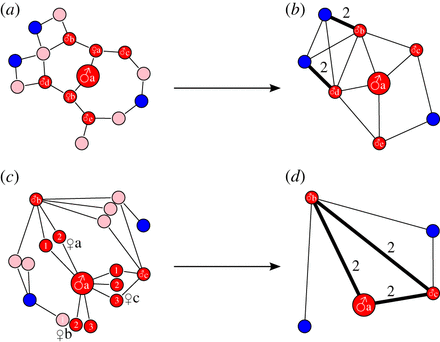
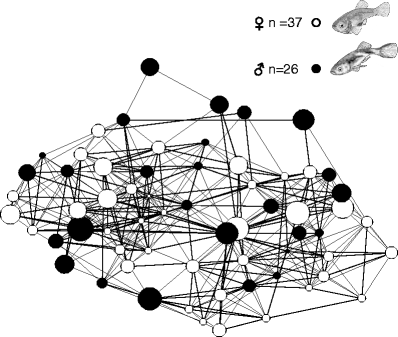
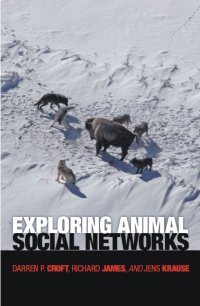
book cover Interactions between agents (whatever they may be) can be represented by a network. In animal social systems the nodes represent individual animals and the lines between them social ties. There is a growing interest, among mathematicians, statistical physicists, sociologists and others in understanding and characterising the structure of such networks, and the dynamics of processes (such as the transmission of disease or other "information") on networks. We are interested in both these aspects [1]. On the structural side, we are developing algorithms to search a complex animal social network for "communities", or sets of nodes that are better connected among themselves than they are to the rest of the network, and to try to understand what causes the population to contain these structures. Most of the animal social networks constructed so far are built via an accumulation of many surveys of the population. An alternative approach is to monitor interactions in real time, to try to understand not only how information might be transmitted through a network, but also how the nature of the information might be having an effect on the structure of the network. Some of the systems we have studied, or will soon be studying, include tropical fish (Jens Krause, Leeds; Darren Croft, Bangor) [1-4], Galapagos sea lions [5] (Fritz Trillmich and Jochen Wolf, Bielefeld), ants (Nigel Franks, Bristol; Ana Sendova-Franks, UWE; Nick Britton, Bath) and red deer (Tim Clutton-Brock, Cambridge).

Models of collective behaviour in biology

Torus The aim of this work is to try to understand the interplay between local rules of interaction between agents and global behaviour. This is a familiar line of enquiry in physics, where the agents might be electrons, atoms or stars,and methods such as Molecular Dynamics might be used to explore the global behaviour. In our work the agents are animals, such as shoaling fish or flocking birds. Simple local rules (avoid neighbours that get too close; align and attract to neighbours a bit further away) are sufficient to generate a rich phase space of solutions [6] and help us look for simple answers to problems which at first sight appear to need a complicated explanation. On a similar theme, I am also engaged in a project to look at the mechanisms by which animals aggregrate. When frightened, many animals will bunch into a tight aggregation, but what are the rules of thumb they use to achieve this? A few complicated (and therefore unsatisfactory) rules have been proposed, but most simple rules don't lead to one large aggregate, so what is going on [7]? Future work will concentrate on evolutionary aspects of aggregation mechanisms. Collaborators on these projects include Iain Couzin (Oxford) and Jens Krause (Leeds).

LDOD

Self-organisation in animal societies
The issue here is to determine the mechanisms by which animals organise themselves. For example, many small freshwater fish shoals disperse completely overnight, yet reform into incredibly well-sorted groups by day; the variance in mean body-size in a typical shoal is tiny compared with that of the population. How do they do that? We might use methods outlined above, or other computational and analytic methods to address such questions [8]. This work is done chiefly with
Jens Krause (Leeds).

If you are interested in any of the above, contact me. Don't assume that you must have a background in condensed matter theory to be able to contribute to these projects.

[1] Exploring Animal Social Networks D.P. Croft, J. Krause and R. James, Princeton, in press.
[2] Social networks in the guppy (Poecilia reticulata) D.P. Croft, J. Krause and R. James, Proc. R. Soc. Lond. B (Suppl.) 271, S516-S519 (2004).
[3] Assortative interactions and social networks in fish D.P. Croft, R. James, A.J.W. Ward, M. S. Botham, D. Mawdsley & J. Krause, Oecologia 143, 211-219 (2005).
[4] Social Structure and Co-operative Interactions in a Wild Population of Guppies (Poecilia reticulata) D.P.Croft, R. James, P.O.R. Thomas, C. Hathaway, D. Mawdsley, K. N. Laland and J. Krause, Behav. Ecol. Sociobiol. 59, 644-650, doi: 10.1007/s00265-005-0091-y (2006).
[5] Social structure in a colonially breeding mammal: Unravelling hidden structural layers and their foundations by network analysis J.B.W. Wolf, D. Mawdsley, F. Trillmich and R. James. Animal Behaviour, in press.
[6] Collective memory and spatial sorting in animal groups I.D. Couzin, J. Krause, R. James, G.D. Ruxton and N.R. Franks. J. theor. Biol. 218, 1-11 (2002).
[7] Geometry for Mutualistic and Selfish Herds: The Limited Domain of Danger R. James, P.G. Bennett and J. Krause, J. theor. Biol. 228, 107-113 (2004).

[8] Fish shoal composition: mechanisms and constraints J. Krause, D.J. Hoare, D. Croft, J. Lawrence, A. Ward, G.D. Ruxton, J-G.J. Godin and R. James Proc. R. Soc. Lond. B 267, 2011-2017 (2000).

Valid HTML 4.01 Transitional Valid CSS!

Top |  Physics |  University of Bath