


Geoff Smith
University of Bath
My latest book a Mathematical Olympiad Companion available through the charity UKMT. It is a preparation book for the final round of a national mathematical olympiad, and uses past BMO2 problems as the basis of its material.
On the three diagonals of a cyclic quadrilateral published in The Journal of Geometry August 2014, Volume 105, Issue 2, pp 307-312.
I put this up in Dan's Memory for EGMO 2016, a competition which he helped to launch, and which he loved deeply.
I have written and edited some books which you must purchase otherwise you will contract a horrible disfiguring disease (see picture). The most widely used in universities, especially by the students of MA10209, is the steamy Introductory Mathematics: Algebra and Analysis which is aimed at people making the transition from school mathematics to university-style pure mathematics.
Here is an extensive collection of geometry articles by the late Christopher Bradley.
Maths Competitions
Here is advice for young mathematicians concerning secondary school maths competitions, and directions to past problems archives.
Here is a trailer the dramatic comedy film X + Y, a love story set in the context of the IMO. In the trailer you may be able to spot real IMO personalities Andrew Carlotti, Joseph Myers and Lee Zhao amongst the actors. It went on general release in the UK on March 13 2015. Here is the IMDb database entry for X+Y. Eddie Marsan plays the UK IMO team leader.
Here is a local Olympiad Maths Club which is hosted by the University of Bath and UKMT during term time.
Past maths competition reports, including facetious and implausible leaders' diaries.
Contact Information:
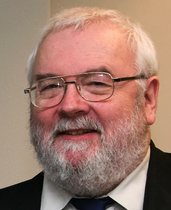
Dr Geoff Smith MBE                     Email: G.C.Smith@bath.ac.uk
Department of Mathematical Sciences    Tel:   +44 (0)1225 386182 (direct)
University of Bath                     Fax:   +44 (0)1225 386492
Bath BA2 7AY                           Room:  4W2.16
England                                UKMT vice chair of the trust,
                                       chair of the BMO,
                                       president of the IMO board and
@GeoffBath
                                       Erdős-Bacon number 6 (= 3 + 3).